

Grid Operator Days 2026
Challenges, New Approaches, and a Look to the Future
We’ve just wrapped up two days filled with exciting technical presentations, valuable insights, and in-depth discussions! This year’s Grid Operator Days focused on both current challenges in grid management and future requirements for grid operators and their systems.
Forecasts as the Foundation for Proactive Grid Management
The continued development of our forecasts is essential for efficient grid management. The focus was on VNL (grid load) and individual-system forecasts, as well as the growing importance of self-consumption and market-driven curtailments. Among other things, participants discussed how these influencing factors can be even better incorporated into forecasts in the future to reflect actual grid conditions as accurately as possible.
Battery Storage from Different Perspectives
A particular focus was placed on the increasing integration of battery storage and the associated challenges for the various market participants. Daniel Engelbrecht from MITNETZ examined the topic from a grid operator’s perspective, while our colleague Felix Bizer from emsys VPP presented the requirements for direct marketing. Finally, a presentation was given on how emsys grid services is further developing its grid platform and processes to meet these new requirements.
Predictive Congestion Management – A Step-by-Step Approach
Even grid operators who are already facing grid congestion but have not yet established predictive congestion management can get started as easily as possible – regardless of their current level of development. Even where the prerequisites for a comprehensive grid status analysis are not yet in place, pragmatic approaches can already be used today to proactively identify and manage grid congestion.
Control of Micro-Generation Systems and Utilization of Flexibilities
Another topic was the control of micro-generation systems via the BDEW Web API. A pilot project demonstrated how control via the metering point operator can already be implemented today. Building on this, a workshop discussed how flexibility from the low-voltage grid could be harnessed in the future for congestion management in the medium- and high-voltage grids, and what such integration into the existing system and process landscape might look like.
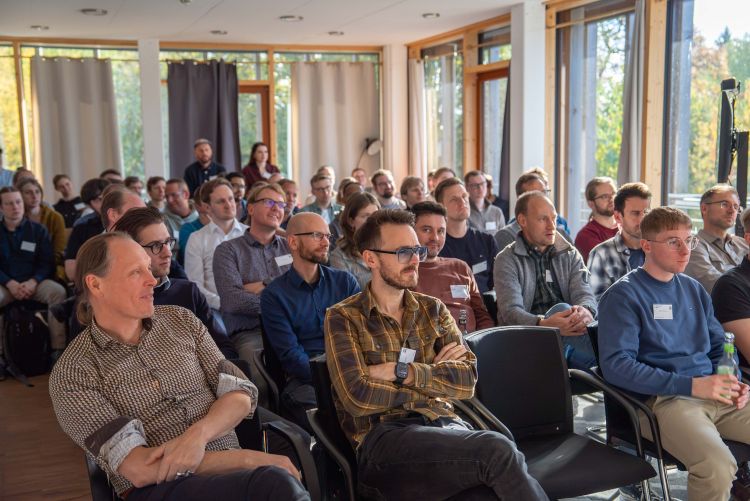
The increasingly complex demands on grid management are driving a growing need for flexible, scalable, and practical solutions. The Grid Operators’ Conference has once again demonstrated how valuable the exchange between grid operators, direct marketers, and technology providers is for tackling these challenges together.
Many thanks to all the speakers and participants for the engaging presentations, open discussions, and fruitful exchange!